3 Hidden Summer Hazards That Can Be Fatal for Pets
The dog days of summer are here. For many, this season comes with endless possibilities for having fun with your pets, like picnics, nature walks, and swimming pools. After being stuck at home for so long due to COVID-19, we bet you’re looking to break up the boredom with some outdoor adventures.
As temperatures rise, so do the risk factors for heat and summer-related dangers. We want to share with you some of the hidden hazards associated with summer activities that pets and their owners adore.
1. Blue-Green Algae
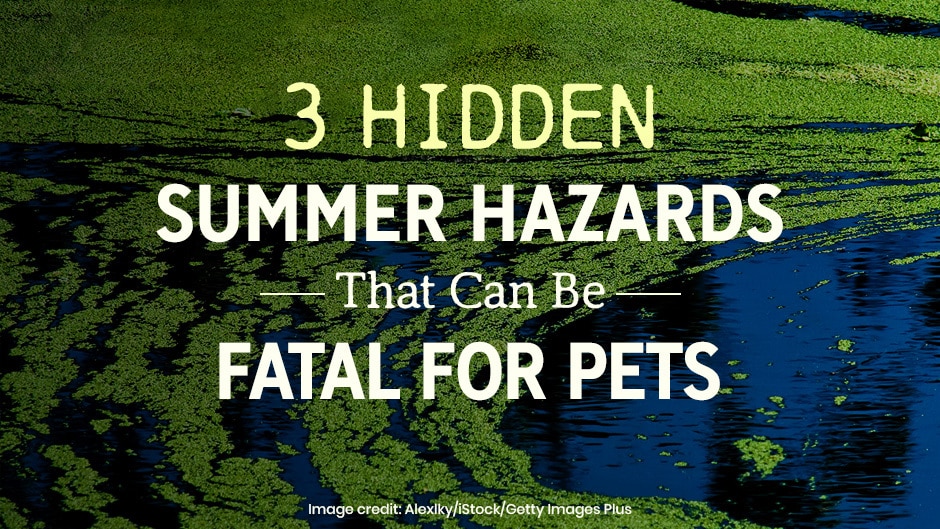
If you’re like many dog owners, you plan your summer walks to include a water source for your hiking buddy to cool off and rehydrate. Staying cool and drinking enough is vital during these scorching hot days, but many of our freshwater ponds and lakes host a deadly and dangerous toxin: blue-green algae.
What are blue-green algae? It’s not a form of algae at all, actually, but a microscopic bacteria called “cyanobacteria.” These bacteria thrive in water sources when temperatures reach 75º or warmer.
What you see as “pond scum” is more than just gross – it’s deadly. Blue-green algae are highly toxic for pets when ingested, leading to seizures, neurological damage, liver failure, and death. Most frightening of all, dogs and cats often die within hours of becoming poisoned.
How can pet owners protect their pets from this deadly bacteria? Never let your dog or cat drink from a water source that has green scum floating on top or near the shoreline. This includes pools and garden ponds.
While you’re out on the trail, provide your pet with fresh, cool water from home. Rinse your dog off if they go for a swim. They could later ingest blue-green algae that cling to their fur and become very sick.
Don’t let your pets explore freshwater ponds and lakes unsupervised. When in doubt, keep your dog out.
2. Leptospirosis
Leptospirosis is another bacterial threat, but it cannot be seen with the naked eye. This bacterial disease has been on the rise as temperatures climb. We know the last thing you want to think about is another zoonotic disease, but leptospirosis can affect pets and humans. https://www.cdc.gov/leptospirosis/pets/index.html
Leptospirosis is caused by spring-shaped bacteria that can be found in water and soil and is commonly spread through urine. The bacteria are picked up from a pet drinking contaminated water, or sniffing or digging in an area where an infected host urinated.
Once inside your pet’s body, leptospirosis causes flu-like illness and can damage the kidneys, liver, and other organs. Young pets, senior pets, and those with weakened immune systems are at risk of dying from leptospirosis.
What areas are high-risk zones? Leptospirosis infects domestic and wild animals. Your pet risks contracting this disease at the dog park, in your yard, and almost anywhere an animal could urinate.
Protect your pet by not letting them drink from unknown water sources, preventing them from exploring areas where mice, rats, and other wild mammals frequent, and asking us about the leptospirosis vaccine.
3. Hot, Hot, Heat Stroke
Each year dogs and cats die from heat stroke. This hidden killer is heartbreaking because many pet owners don’t realize their pets are at risk.
Also known as hyperthermia, heat stroke happens when the body is too hot for too long. Heat stroke occurs frequently with pets because dogs and cats cannot regulate their temperature through sweat, relying on other means such as panting or lying on a cool surface. When they’re on a hike, locked in the car, or fenced in the backyard, these methods may not be enough to bring their body temperature down to a safe level.
Heat stroke is extremely dangerous, leading to stroke, organ failure, and death. Some pets are more susceptible to heat stroke than others, such as dogs and cats with short snouts, senior or overweight pets, and those with thick coats.
To keep your pal from reaching an unhealthy temperature, supply them with ample cool, fresh water. (Are you seeing a pattern yet?) Always provide them shade when outdoors. Watch for signs of overheating like excessive panting, shivering muscles, and weakness. Don’t let your pet exercise in the middle of the day when temperatures are the highest. And NEVER leave a pet in your car.
What should you do if you suspect your dog or cat is overheating? Immediately bring them inside to an air-conditioned location and provide them with cool water. Hose them down or put them in the shower, using room-temperature water. Do not use cold water, which can send them into shock. Wrap them in a damp towel, call us, and bring them in.
Don’t Let These Summer Hazards Turn Your Summer into a Bummer
Make a splash, have a blast, and keep the fun in summer fun! Protecting your pet takes a bit of proactive planning but can be the difference between life and death. We hope these tips help keep your furry family members safe all summer long.